How to Get Rid of Mice: A Complete Guide
Hearing scratching in the walls at night, or finding small dark droppings in a kitchen drawer, usually means the same thing: a house mouse has found a way in. Mice are one of the most common household pests worldwide, and they're also one of the easiest to get wrong. People often put out one trap in the middle of the floor, or scatter poison and hope. Both rarely work. Getting rid of mice comes down to three things: confirm what you're dealing with, trap in the right places, and close the gaps they came in through.
First, Confirm It's Mice (Not Rats)
Treatment differs between mice and rats, so it's worth checking before buying anything:
- Droppings. Mouse droppings are small, about 3–6 mm, with pointed ends, like dark grains of rice. Rat droppings are much larger, around 12–20 mm, and blunter.
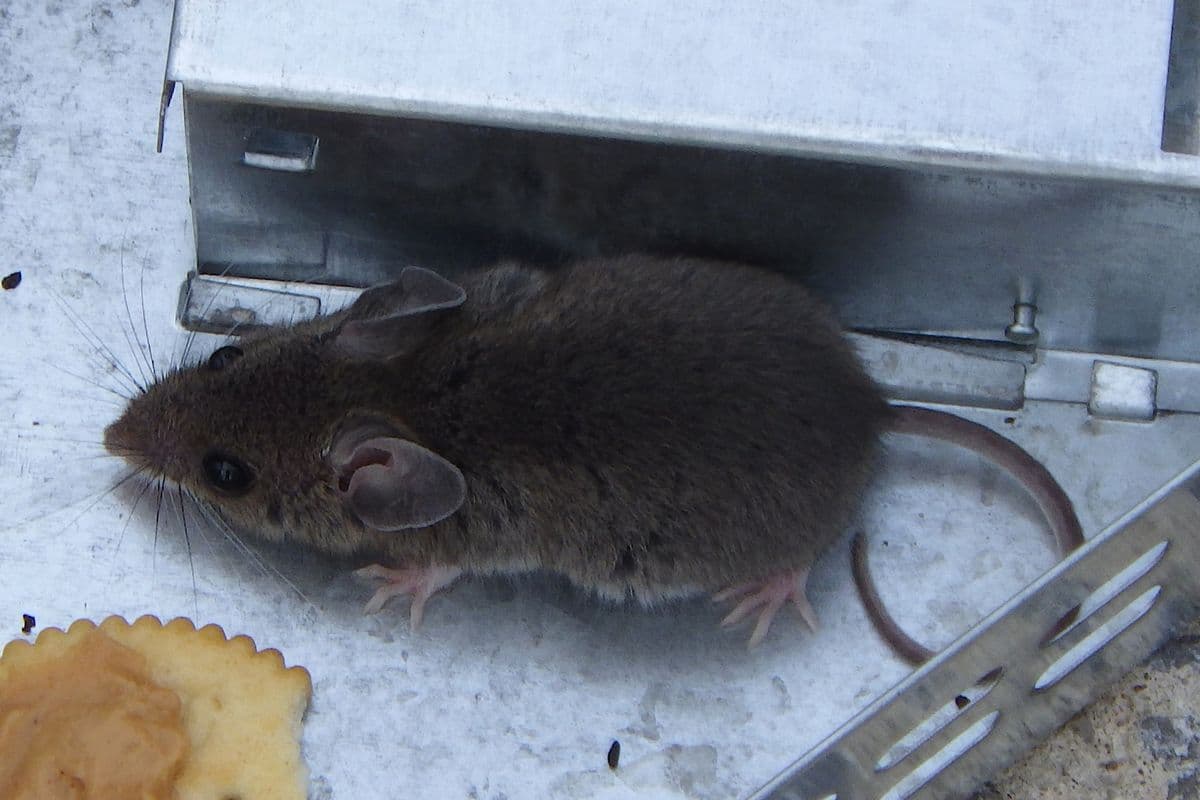
- Size. An adult house mouse is small enough to fit in your palm, with large ears relative to its head and a thin tail about as long as its body. A young rat has a heavier head and noticeably larger feet.
- Gnaw marks. Mice leave tiny, fine scratches. Rats leave coarser, deeper grooves.
- Where you see activity. Mice tend to stay within a few metres of their nest and explore anywhere: kitchen cabinets, drawers, behind appliances. Rats usually follow fixed routes along walls and are more cautious about new objects.
If what you're seeing looks like rats, call a professional sooner rather than later. Rats are harder to trap, more cautious, and more destructive.
Why One Mouse Usually Means More
A female house mouse can start breeding at around six weeks old and can produce a litter every few weeks under good conditions, often 5–8 young at a time. A single pregnant mouse that gets indoors in autumn can become a small established population by winter. So if you've seen one mouse, plan as if there are several, and set enough traps to deal with a group rather than one individual.
Traps vs. Poison: Why Traps Come First
Rodenticide (poison bait) is widely sold, but inside a home it has real drawbacks:
- Mice die where you can't reach them. Poisoned mice often retreat into wall voids, ceilings, or under floors, and the smell of a decomposing mouse can last for weeks.
- Pets and children. Bait left in accessible places is a poisoning risk for dogs, cats, and young children. If you use bait at all, it should only go in tamper-resistant bait stations.
- Secondary poisoning. Owls, hawks, and pet cats can be poisoned by eating a mouse that has eaten bait.
For most homes, traps are the better first choice. You can see whether they worked, you can remove the mouse, and there's no poison inside the house. Your main options:
- Snap traps: cheap, fast, and still among the most effective tools when placed correctly
- Enclosed or electronic traps: kill quickly inside a closed box, so you don't see or touch the mouse
- Live-catch traps: work well, but release the mouse far from your home (at least a couple of kilometres), check them often, and check local rules on releasing wildlife. A mouse released at the end of the garden will usually just come back.
Glue boards are widely criticised as inhumane because trapped mice can suffer for a long time, and some places restrict their use. Most people do better with the options above.
Where to Put Traps (This Is Where Most People Go Wrong)
Mice don't like crossing open floor. They move along walls and edges, using their whiskers to feel their way. A trap in the middle of the kitchen floor will mostly get ignored.
- Place traps flush against walls, with the trigger end facing the wall, so a mouse running along the edge walks straight into it.
- Put them where you've found droppings or gnaw marks: behind the fridge and stove, under the sink, inside lower cabinets, along the back of pantry shelves.
- Use more traps than you think you need. A common guideline is a trap every 1–2 metres along active runways. A dozen traps for a modest problem is normal, not overkill.
- Bait small. A pea-sized dab of peanut butter, chocolate spread, or soft cheese works better than a large chunk, because the mouse has to work at the trigger instead of grabbing food and leaving.
- Pre-bait if mice seem shy. Leave traps baited but unset for two or three nights so mice get used to them, then set them all on the same night.
Check traps daily. Wear disposable gloves when removing mice and cleaning up.
Clean Up Safely
Mouse droppings and urine can carry bacteria such as Salmonella, and in some regions wild rodents can carry viruses that spread through dust from their droppings. When you clean areas with heavy activity:
- Don't sweep or vacuum dry droppings, because that can stir particles into the air
- Spray droppings and nesting material with disinfectant first, let it soak for several minutes, then wipe it up with paper towels
- Wear gloves, bag the waste, and wash your hands thoroughly afterwards
- Throw away any food the mice have reached, including food in cardboard or thin plastic packaging they may have chewed through
If you have a large infestation in a closed space like an attic or shed, consider professional cleanup.
Stop Them Coming Back: Exclusion
Trapping deals with the mice already inside. Sealing entry points stops new ones from replacing them. A house mouse can squeeze through a gap of about 6 mm, roughly the width of a pencil, so the gaps you need to find are small.
- Check where pipes and cables enter walls, especially under sinks and behind the washing machine, dryer, and stove
- Fill gaps with steel wool or copper mesh, then seal over them with caulk or expanding foam. Mice can chew through foam or caulk on its own.
- Fit door sweeps to exterior doors, including garage doors
- Cover vents and weep holes with fine metal mesh instead of blocking them completely, since they're there for ventilation and drainage
- Store food in hard, sealed containers, including pet food and birdseed, which mice find especially attractive
Outdoors, keep woodpiles, compost, and dense vegetation away from the house walls, because these give mice cover right up to your entry points.
When to Call a Professional
DIY trapping works well for a small, recent problem. Call a licensed pest professional if:
- You're still catching mice after two to three weeks of steady trapping
- You can hear activity in several rooms or across different floors
- You can't find where they're getting in
- The droppings point to rats, not mice
- Someone in the home is vulnerable, such as an infant, an elderly person, or someone with a weakened immune system, and you'd rather not handle droppings and nesting material yourself
A good professional will inspect the whole building, find and seal entry points, and set up trapping or bait stations in a way that's safe for children and pets. Treat that inspection as part of the job, not an extra.
Key Takeaways
- Check the droppings first: mouse droppings are rice-sized and pointed, rat droppings are much larger
- Assume one mouse means several, and use enough traps to match
- Traps are usually a better indoor choice than poison: no smell from mice dying in the walls, and no risk to pets or children
- Set traps flush against walls with the trigger facing the wall, and use small amounts of bait
- Wet down droppings before cleaning them up, and never sweep or vacuum them dry
- Seal gaps of 6 mm or more with steel wool plus caulk, or the mice will keep coming back